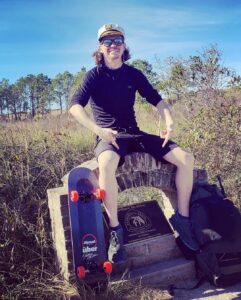
Moondog Roop didn’t touch a skateboard until age 33, and that late start is exactly what makes his story so relatable. Growing up in eastern Tennessee in Appalachia, he had an outdoorsy childhood shaped by Boy Scouts, roller hockey, and the kind of neighborhood freedom that builds real confidence over time. But he also admits he was a cautious kid, someone who stayed close to the known path. That arc matters because long distance skateboarding, often called thru-skating, is basically a commitment to the unknown. When you’re pushing miles day after day, the terrain, weather, and people all change, and you have to change with them.
Photos Courtesy of Moondog Roop
Before the board came long distance hiking, including sections of the Appalachian Trail and plenty of miles in Colorado. The breakthrough idea arrived after Moondog read about another adventurer, Alex Foat, who skateboarded parts of the Florida Trail. Moondog copied the blueprint, reached out for gear advice, and committed to a solo attempt even though he still felt shaky on the board. Thru-skating the Florida Trail is not a clean road trip. He estimates only a few hundred miles are skateable roads, while the rest means carrying the skateboard for hundreds of miles through sand, brush, and uneven ground. That mix of skating and hiking turns the journey into a true endurance adventure with constant problem-solving.
The deeper engine behind the miles is recovery. Moondog got sober from alcohol at 27 after a low point that forced him to stop blaming the outside world and face his own choices. He describes sobriety as more than quitting a substance; it’s learning to live with yourself and becoming someone you respect. That theme comes back when he talks about identity, including the moment he realized he was “polishing” himself for others instead of being honest. The nickname Moondog began as a trail name, but over time it became a symbol of the person he actually is in the world now: open, imperfect, and moving forward anyway.
As his thru-skating grew, so did the life it created. He met fellow skater Justin Bright, and after only a couple of nights of knowing each other they committed to skating New Mexico, then later routes like the Natchez Trace Parkway, the perimeter of Puerto Rico, and a massive Texas skate. New Mexico became the most life-changing. A stop in the tiny desert town of Madrid led Moondog to move there, build a relationship, start a construction business, and plug into a tight community where everyone knows everyone. He also helped someone else navigate sobriety, showing how outdoor adventure and addiction recovery can ripple outward in surprising ways. 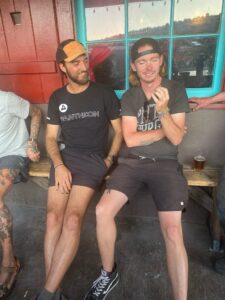
Not every trip is cinematic. Puerto Rico brought heat, chafing, rashes, food poisoning, and daily thoughts of quitting. His mental rule is simple: never quit on a bad day, because pain makes decisions unreliable. Rest, reassess, and remember why you started. He also highlights “trail magic” and “roadside love,” those unexpected moments when strangers offer help, a place to stay, or simply encouragement from a passing car. The takeaway is practical and hopeful: you don’t have to start young, you don’t have to be the best skater, and you don’t have to have everything figured out. You just have to begin, keep making the next right choice, and let the next good day find you.