Most people assume meaningful philanthropy requires big budgets, big organizations, and big overhead. Forrest Mcsweeney’s work with The Uplift Project challenges that idea with a simple premise: small, targeted microgrants can unlock life-changing results when the recipient already has the skills, the plan, and the community support. This approach to grassroots philanthropy is built around direct giving, local relationships, and fast feedback loops, which are often missing in traditional charity models. The result is a practical blueprint for sustainable development that centers local agency instead of outside control.
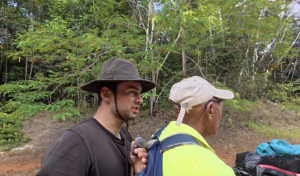
Photos Courtesy of Forrest Mcsweeney
A pivotal story behind this mindset comes from a family in Senegal who had the land, the labor, and the building materials for a home addition, but lacked the final $200 for cement. That “last mile” gap kept a cousin from relocating and starting over, until a tiny gift closed the loop. It’s a powerful reminder that poverty is not a lack of work ethic or ability. Often it’s a cash-flow problem where one small purchase removes a bottleneck. In economic terms, the highest-impact donation is sometimes the one that completes a plan rather than starting a new one.
The Uplift Project applies that lesson in Guyana through microgrants that typically hover around $500. Forrest focuses on people with roots in the community, often women with children, echoing microlending research that shows how reliably women reinvest in family stability. The process is intentionally hands-on: interviews, clear spending plans, and basic accountability like receipts and photos. One seamstress needed an electric sewing machine plus solar components to power it, turning a stalled business into steady income. Another entrepreneur used funds to buy tools and cement supplies to start making cinder blocks locally, reducing costly imports.
Guyana’s geography makes this work more urgent and more effective. Some villages are reachable only through long chains of taxis, ferries, buses, and a final daily boat, which makes outside markets expensive and opportunity scarce. That isolation also creates a strong local economic multiplier: when a baker earns more, she spends locally, and that money circulates through farmers, seamstresses, and other trades before leaving the community. A larger oven for a baker can mean a 300% jump in output per batch, not because demand is missing, but because equipment is the constraint. Microgrants work best when they remove constraints.
As the project grows, needs expand beyond entrepreneurship into community-led infrastructure like clean drinking water. With climate change disrupting rainy and dry seasons, many families rely on rooftop rainwater harvesting and 500-gallon tanks that can run dry before rains return. Instead of imposing a one-size-fits-all solution like a failed well, the Uplift Project invests in what residents already use: gutters, pads, and additional tanks. The same bottom-up logic extends to school supplies and uniforms, reducing barriers that push kids out of education early. If you care about nonprofit transparency, direct impact, and measurable social impact, this model offers a compelling alternative to overhead-heavy aid.
To learn more about Forrest and The Uplift Project check out www.upliftproject.org. You can also follow along on Instagram @upliftprojectgy and on YouTube @upliftprojectgy.